


- January 16, 2026
- Jonathan Gordon
Defining Dark Kitchen Design
In a recent conversation with a long-time client, we were discussing trends, and my client candidly snarked “Who in their right mind would want a dark kitchen? Are people really willing to accidentally cut their fingers off while chopping carrots for an aesthetic choice?”
On its face, that’s a good question, since you really need ample light to use a kitchen properly and safely. But there’s some confusion here between a dark kitchen and a poorly-lit kitchen. The two are not mutually exclusive!
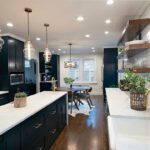
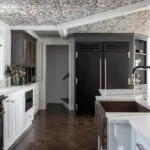
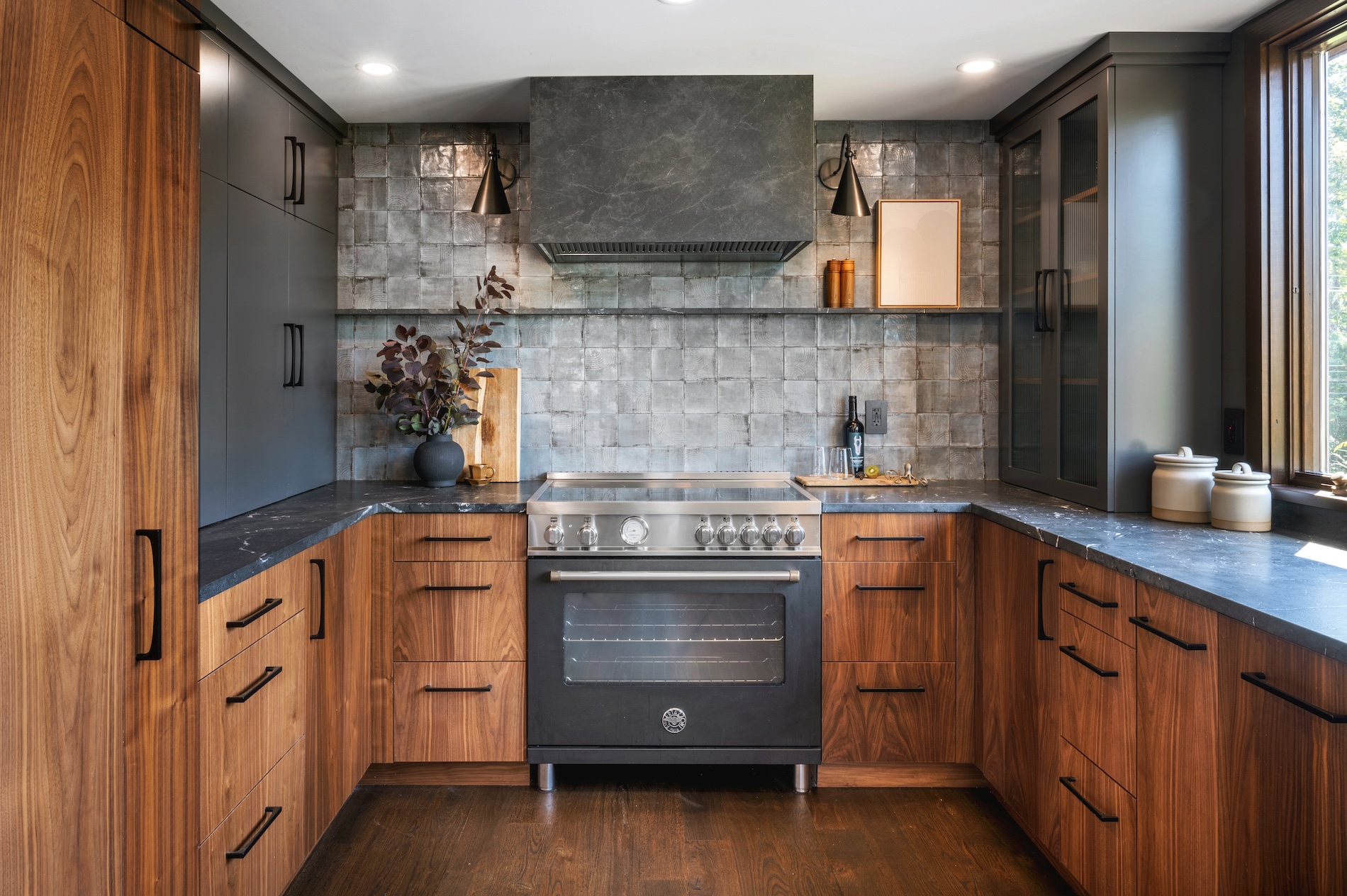
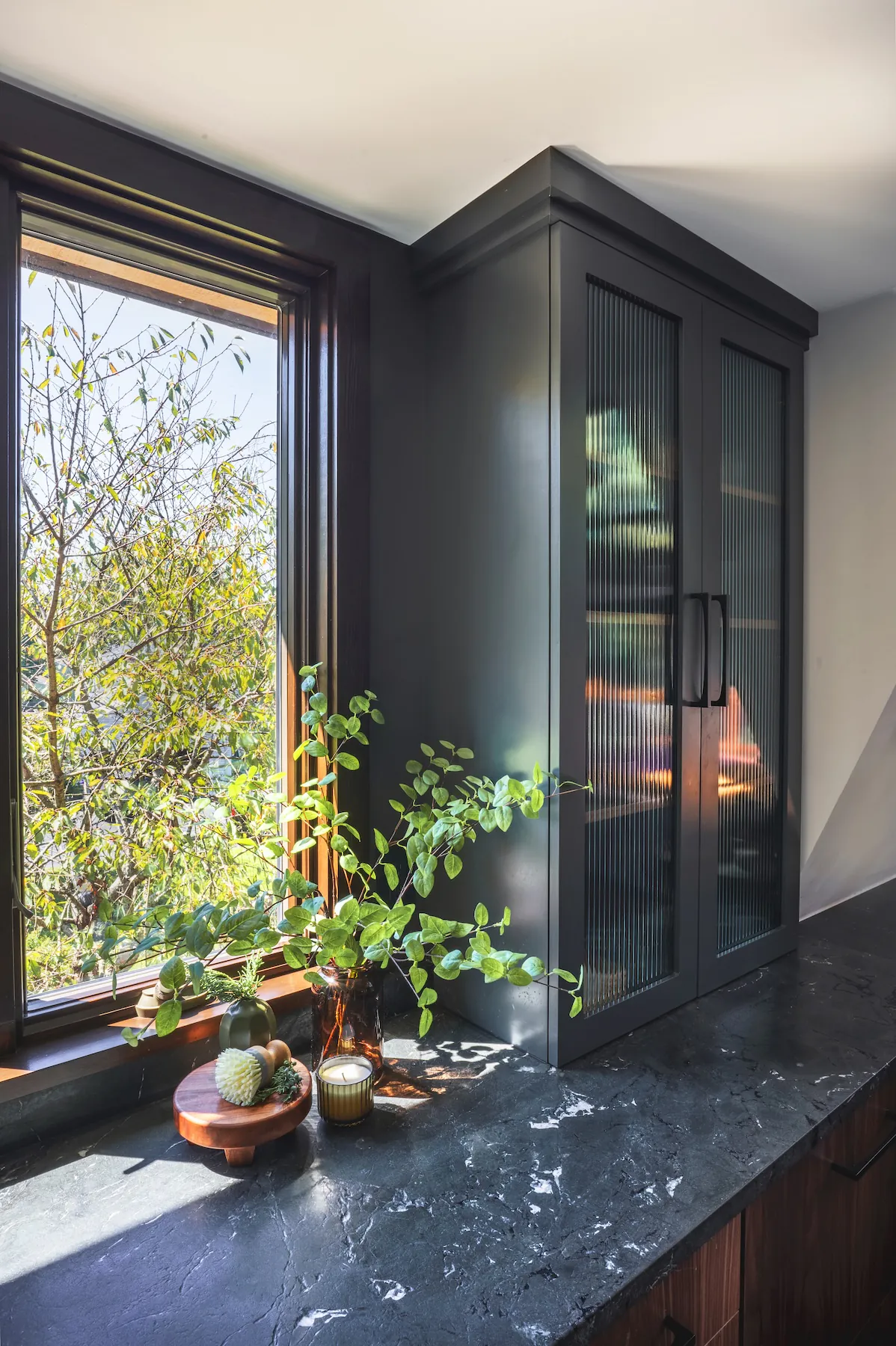
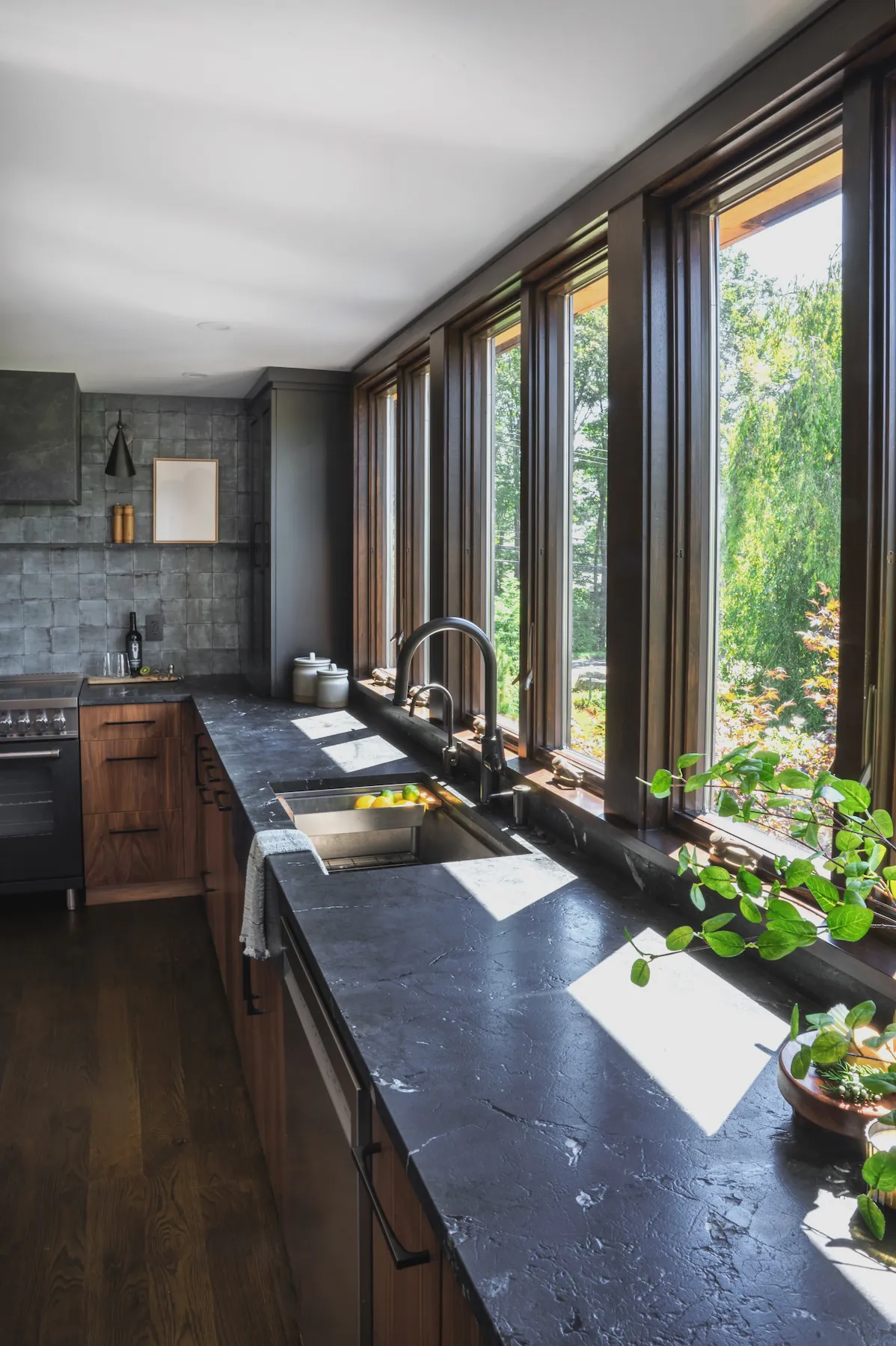
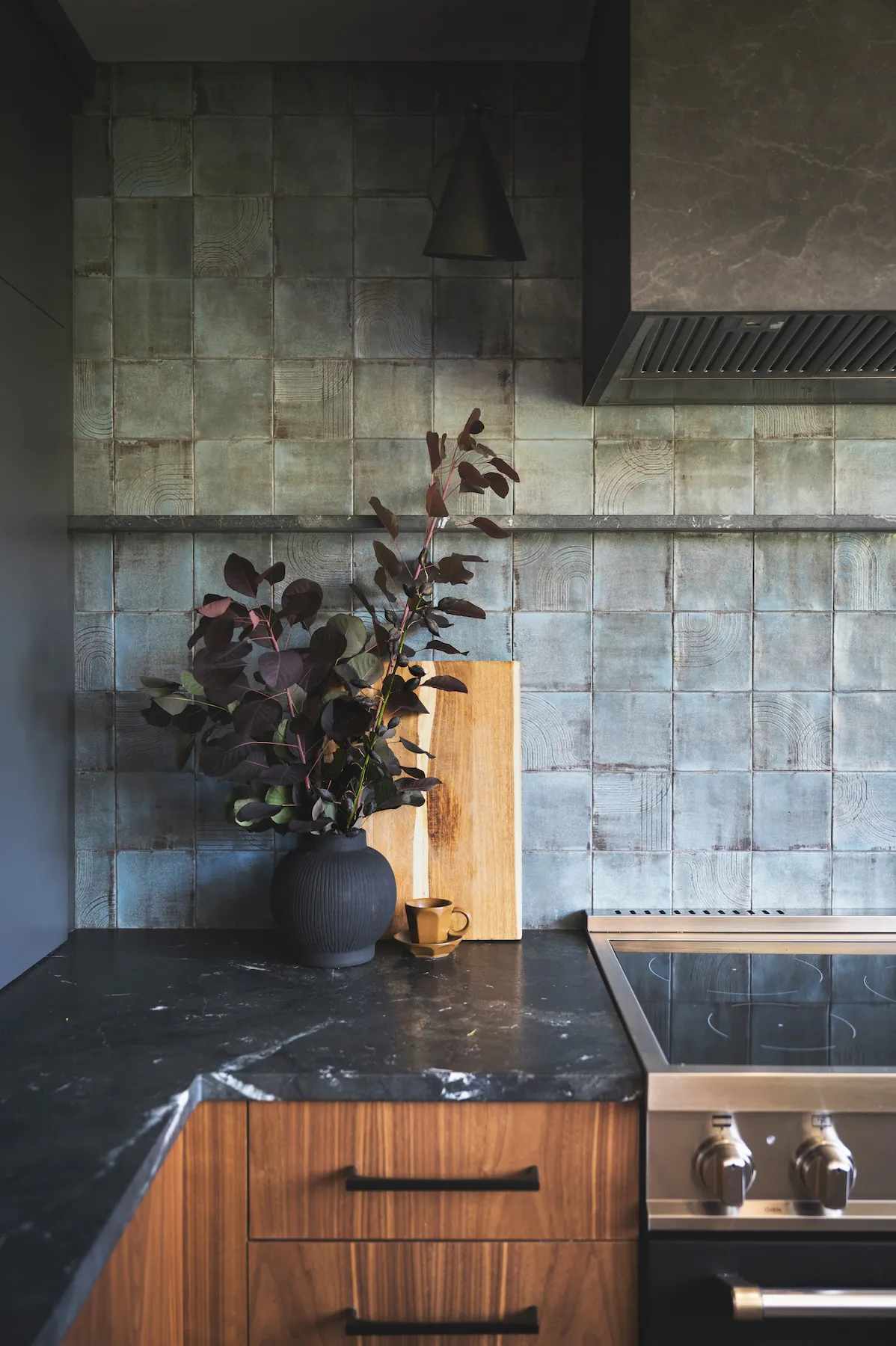
You can have dark cabinetry, countertops, backsplashes, appliances, and walls but still have plenty of overhead lighting to provide an excellent work environment—so with that out of the way, let’s explore what makes a good dark kitchen design!
The Foundation of Dark Kitchen Design: Cabinetry and Wall Color
First, what makes a kitchen a dark kitchen? The answer is that it’s about the predominant coloration of the space. You can’t have a dark kitchen if you have white cabinets, full stop. Even with black countertops and appliances, it’s still a light kitchen.
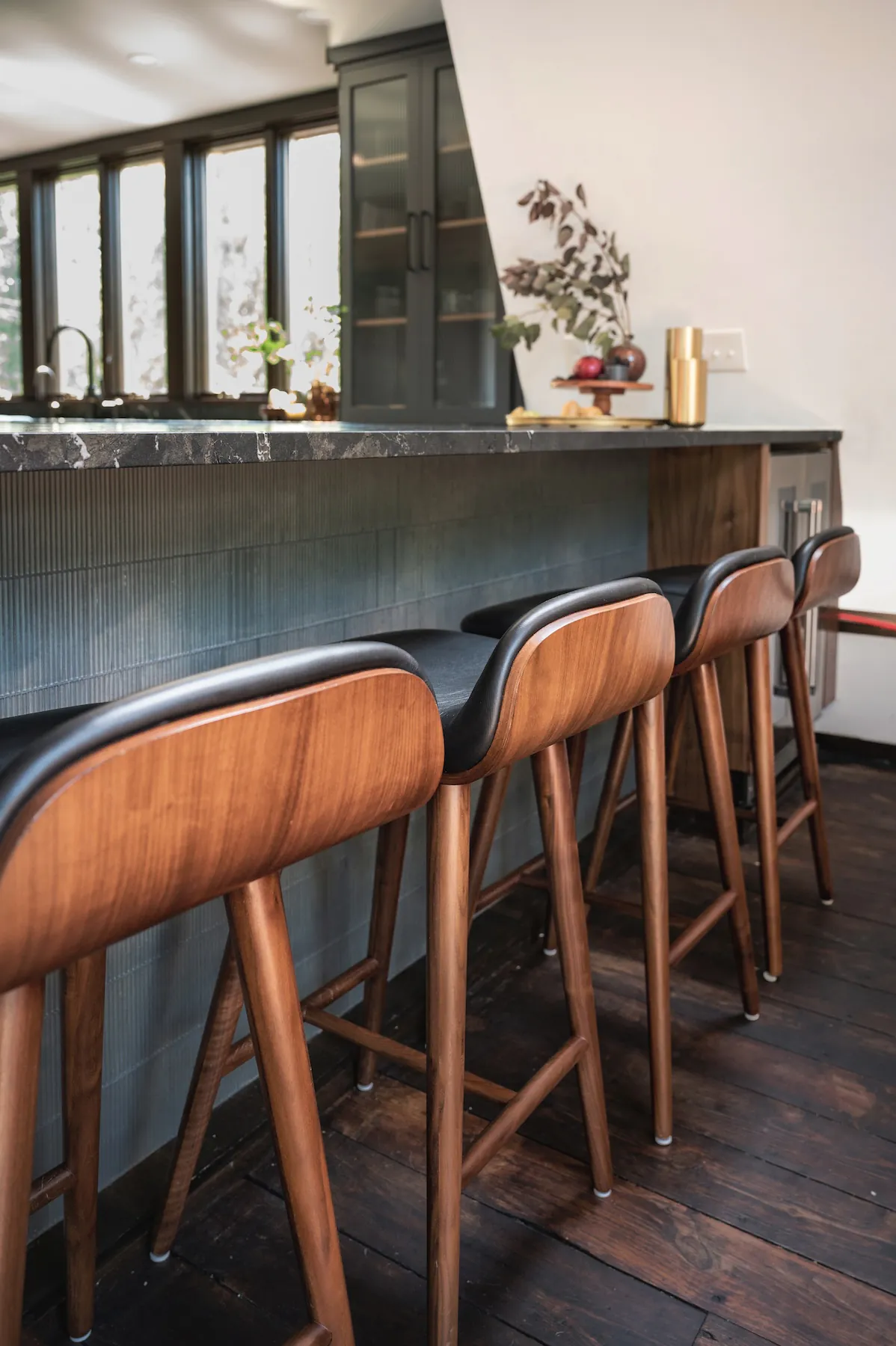
So the first qualifier would be the color of the cabinetry since that is what takes up the most space in most kitchens. If your kitchen doesn’t have all that much cabinetry, then the burden shifts to the walls. If you have dark cabinetry and dark walls, you have the baseline elements of a dark kitchen.
Choosing Countertops for a Cohesive Dark Kitchen
Now that we’ve established the baseline, it’s time to consider the other elements in size order: countertops, appliances, fixtures, and hardware.
If you use bright white countertops with dark cabinets, do you have a dark kitchen? No, not really. You have a nice contrast, but not a dark kitchen. At the very least your countertops should be a medium tone, if not dark themselves.
You can certainly have white streaks and bright accents in your solid surface of choice, but the predominant coloration has to be a midtone or darker.
Appliance Choices That Work in Dark Kitchen Design
For your appliances, the starting point is stainless steel, since it is already somewhat neutral in terms of tonality. You don’t need to use matte black or other dark appliances to achieve a dark kitchen.
Some dark kitchens even use white appliances as a contrast, but I would recommend only doing something like that if you have a lot of dark cabinetry to offset them—a large kitchen can handle that, a small kitchen really can’t.
Fixtures and Hardware: The Details That Complete a Kitchen
For your fixtures and hardware, consider using a bronze or black finish. You can certainly use any finish without breaking the aesthetic, but using a dark finish really drives the look home. It’s all in the details, as we say.
Lighting Considerations for a Functional Dark Kitchen
When you’re designing your dark kitchen, just make sure that you have lots of overhead lighting and under-cabinet lighting. After all, we need to be sure that we keep all of our fingers intact while chopping those carrots.
Why Homeowners Are Choosing Dark Kitchen Design
Now that I’ve explained how to create a dark kitchen, the question on many lips is “why?”
The best explanation I know of is that dark evokes cozy in small and medium spaces, and sophisticated in large spaces. Achieving cozy with a white kitchen is very difficult to do (but not impossible), so many people are turning to a deeper and darker aesthetic to drive home a warm and comfortable vibe.
As for sleek and sophisticated… there’s a reason most people don’t opt for a white piano or a white town car! And it’s a little black dress, not a little white dress. Dark colors create a chic vibe that has a broad appeal. So if you’re looking for something a bit different in your home, the dark kitchen may be right for you.
Considering a Kitchen Update?
If you’re exploring a dark kitchen for your home and want guidance on materials, layout, and lighting that actually work together, we’re here to help.